
Heat Pump vs Electric Storage Geyser: Annual Electricity Bill Comparison for Gujarat Homes
For 3 BHK and 4 BHK bungalows with multiple bathrooms, running separate electric geysers consumes huge amounts of power. Here is the real mathematical ROI of central heat pumps.

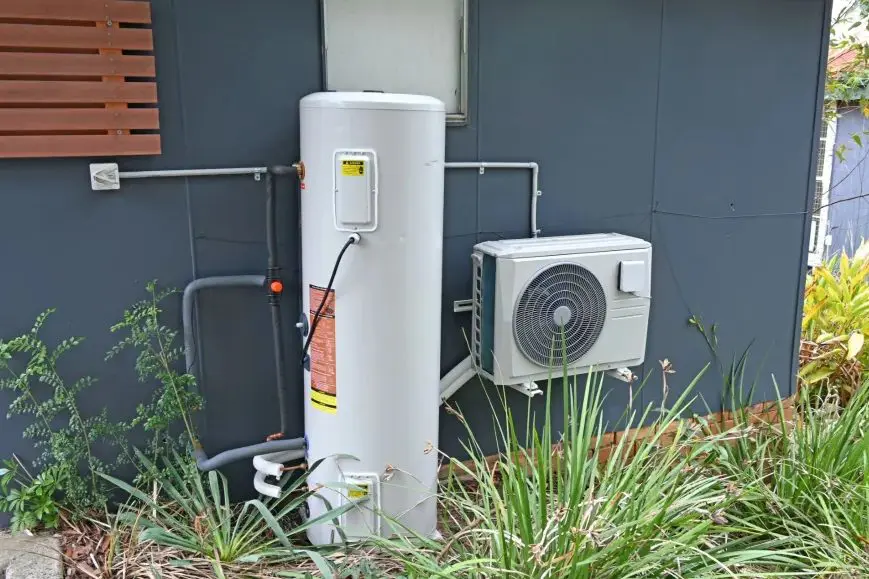
Heat Pump vs Electric Geyser: Making the Right Choice for Your Bungalow
If you're building a new bungalow or upgrading your home in Surat, one of the most critical decisions you'll make is choosing your hot water system.
Usually, the default choice is straightforward: just install a 25-litre electric geyser in every bathroom. While this works perfectly for a small apartment, the math changes drastically when you scale up to a 3 BHK or 4 BHK home.
When you have four to five bathrooms, the electricity consumption required to heat water skyrockets. That’s why more homeowners in Gujarat are shifting toward central hot water heat pumps.
But is a heat pump truly worth the investment? Let’s break down exactly how these two systems compare, and more importantly, how they impact your annual electricity bills.
The Traditional Approach: Electric Storage Geysers
An electric geyser is essentially a tank of water with a high-power heating element inside. It uses electricity directly to generate heat—much like an immersion rod.
A standard 25-litre geyser usually draws around 2 kW to 3 kW of power. When you have a single bathroom, this isn't a problem. But if you have four bathrooms and multiple geysers are running simultaneously during busy mornings, your home experiences a sudden electrical load of 8 kW to 12 kW.
Over a year, this heavy direct-heating method can quietly become one of the biggest contributors to your monthly electricity bill.
The Modern Alternative: Hot Water Heat Pumps
A heat pump operates on a completely different and much smarter principle. Instead of generating heat directly through a coil, an air-source heat pump extracts free ambient heat from the outside air and transfers it into your water tank.
The electricity it consumes isn't used to heat the water directly; it’s only used to run a compressor and a fan. Because of this, heat pumps are incredibly efficient.
This efficiency is measured by the Coefficient of Performance (COP). If a heat pump has a COP of 4, it means for every 1 unit of electricity it consumes, it produces 4 units of heating energy. In a warm climate like Gujarat, ambient air provides abundant heat, allowing heat pumps to operate at peak efficiency almost year-round.
Head-to-Head: Electricity Cost Comparison
Let’s look at a realistic scenario. Imagine a family living in a four-bathroom bungalow in Surat that uses about 300 litres of hot water every day.
We can fulfill this requirement in two ways:
- Option A: Four individual 25-litre electric geysers
- Option B: One central heat pump system connected to a 300-litre storage tank
Illustrative Annual Cost Breakdown
| Parameter | 4 Electric Geysers | Central Heat Pump |
|---|---|---|
| Connected Electrical Load | 8.0 - 12.0 kW | 0.85 - 1.2 kW |
| Estimated Daily Power Usage | 14.5 kWh (Units) | 3.4 kWh (Units) |
| Monthly Cost (at ₹7.50/unit) | ~ ₹3,260 | ~ ₹765 |
| Estimated Annual Cost | ~ ₹39,120 / year | ~ ₹9,180 / year |
| Potential Annual Savings | - | ~ ₹29,940 / year |
Note on Calculation: These figures are for illustrative purposes. Your exact savings will depend on your family size, actual water usage, electricity tariffs, and equipment specifications. However, the contrast in power consumption between the two technologies remains drastically in favor of the heat pump.
Why a Central Heat Pump Makes Sense for Bungalows
For smaller homes, an electric geyser is perfectly fine. But for premium homes and bungalows, a central heat pump offers benefits that go far beyond just saving electricity:
1. Instant Hot Water in Every Bathroom
With a properly designed central plumbing loop, hot water is stored centrally and circulated to every tap. You don't have to wait 15 minutes for a geyser to heat up—you get pressurized hot water the moment you turn on the shower.
2. Massive Reduction in Electrical Load
Running four electric geysers simultaneously requires thick electrical wiring and a heavy sanctioned load from the electricity board. A heat pump requires only a fraction of that power (usually under 1.5 kW), freeing up electrical capacity for your air conditioners and home appliances.
3. Safer Bathrooms
Because the central heating system is installed on the terrace or utility area, you eliminate the need to have high-voltage electrical heating elements directly inside your bathrooms, significantly reducing the risk of electrical hazards.
4. High-Pressure Shower Compatibility
Modern bathrooms with rain showers, body jets, and jacuzzis require large volumes of hot water at high pressure. Standard 25-litre geysers run out of hot water in minutes. A 300-litre central heat pump ensures you never run out of hot water halfway through a shower.
What About Solar Water Heaters?
Solar water heaters are a great, zero-cost heating solution when the sun is shining. However, during the monsoon season or cloudy winter days, solar panels struggle to generate sufficient heat. When that happens, solar systems switch to an internal electrical backup coil—which consumes just as much power as a standard geyser.
A heat pump, on the other hand, doesn't rely on direct sunlight. It extracts heat from ambient air, allowing it to provide reliable, low-cost hot water 24/7, regardless of weather conditions.
Final Verdict: Which System Should You Choose?
If you live in a 1 BHK or 2 BHK apartment with limited hot water needs, stick to high-quality electric geysers. They are cheap to buy, easy to install, and get the job done.
However, you should strongly consider a Central Heat Pump System if you meet any of the following criteria:
- You are building a new 3 BHK, 4 BHK, or larger bungalow.
- You have three or more bathrooms in daily use.
- You are installing high-flow rain showers or a bathtub.
- You want to drastically reduce your long-term electricity bills.
When you factor in the lifecycle cost (equipment price + 10 years of electricity bills), a central heat pump almost always pays for itself within the first 3 to 4 years while delivering a far superior bathing experience.
Need Help Planning Your Plumbing & Heating?
Choosing the right capacity and designing the plumbing circulation loop is critical before your tiles are laid down. If you are constructing a new bungalow in Surat or South Gujarat, contact Springwell Water Tech. Our engineers will calculate your exact water requirement and design the perfect central heating system for your family.
Vimal Sutariya
Vimal Sutariya has over 12 years of hands-on field experience designing and installing water softening plants, commercial RO systems, and booster pumps across Surat, Hazira, Sachin GIDC, and South Gujarat.
Facing Hard Water or High TDS in Surat?
Get your home or commercial water tested by our experienced technicians. We test Total Dissolved Solids (TDS), Calcium Hardness, and Turbidity right at your doorstep.
Related Water Treatment Guides
Water Softener vs RO Plant: What is the Real Difference and Which One Does Your Home Need?
Many homeowners in Surat mistakenly install an RO purifier when they actually need a whole-house water softener. Here is the complete engineering breakdown of hardness vs TDS.
Water Quality & TipsSurat Water Hardness Guide: Borewell TDS & Hardness Levels Across Vesu, Adajan, Pal & Hazira
Surat groundwater varies drastically between coastal zones, riverbeds, and industrial corridors. Here is our field data on water parameters across major Surat localities.